
How to Choose LED Lighting: Lumens, Colour & Compatibility
March 05, 2025
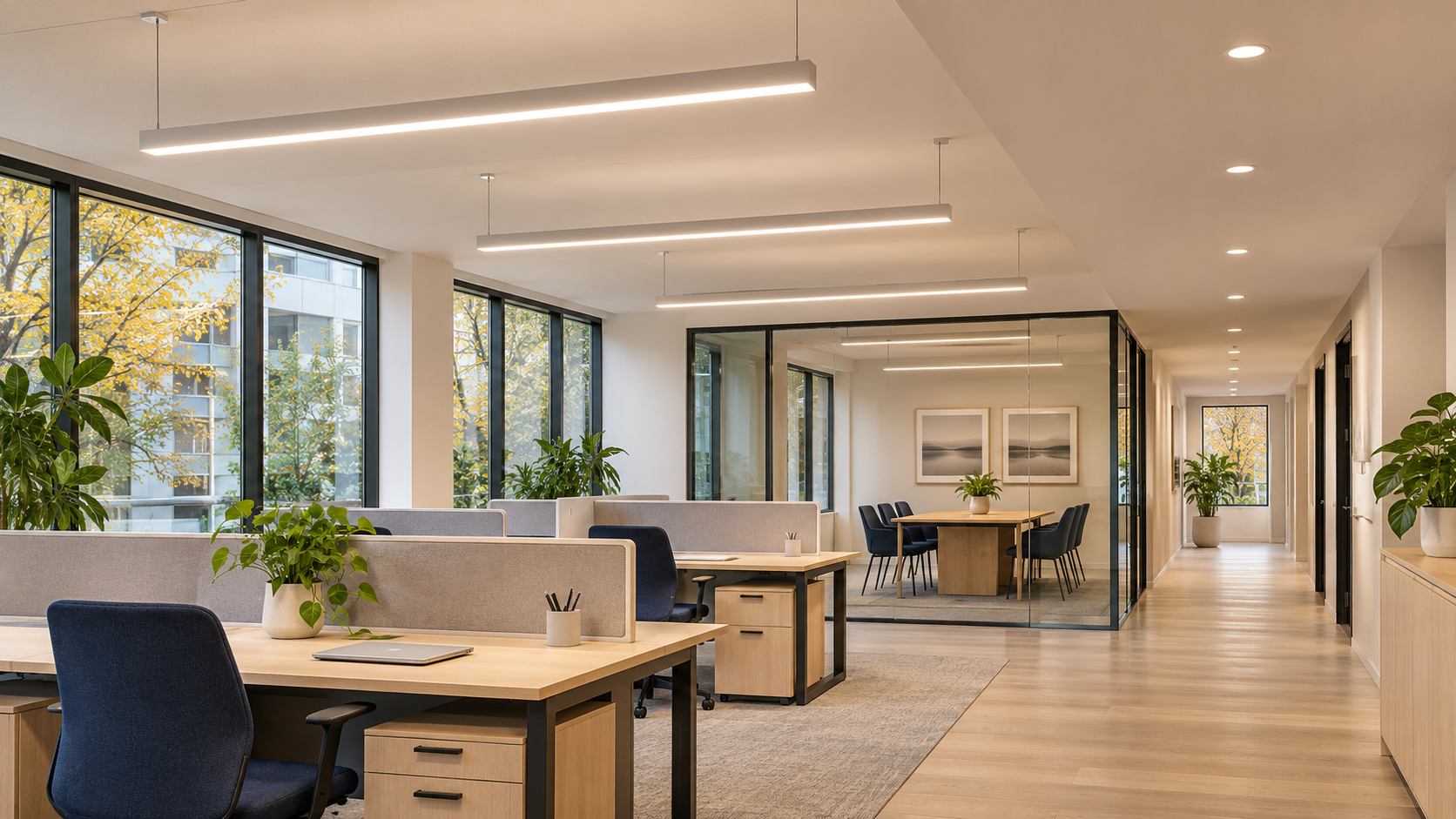
Two LED lights can look almost identical in a product photo and still perform very differently. One may have the right brightness but the wrong voltage; another may fit the ceiling but work poorly with the existing dimmer.
Use the checks below to build a useful shortlist before comparing prices. They apply whether you are replacing one light at home or planning an upgrade for an office, store or commercial building.
Start with the Space and the Job
Describe what the light needs to do. A kitchen counter needs useful task lighting. An office needs comfortable illumination across desks. A high-ceiling warehouse needs light directed onto work areas and aisles.
Record the room dimensions, ceiling height, existing fixture layout and anything you want to improve: dark corners, glare, uneven light, flicker or frequent replacements. For a commercial project, share the drawings or required lighting levels if available.
Compare Lumens Before Watts
Lumens describe light output; watts describe power consumption. Compare the lumen output of the replacement, then consider how that light is distributed. Wattage alone is not a reliable brightness comparison between different lighting technologies.
For example, two fixtures listed at 4,000 lumens may use different wattages. They may also send light in different directions. A narrow beam and a wide distribution can produce different results even with the same lumen rating.
For larger spaces, a fixture count based only on floor area can miss shelving, mounting height and task requirements. Ask for help reviewing the layout rather than choosing solely by the highest wattage.
Choose the Colour of the Light
Colour temperature is measured in kelvin (K). It describes the appearance of the light, not the amount of light produced.
- 2700K–3000K: a warmer appearance, often chosen when a space should feel relaxed or welcoming.
- 3500K–4000K: a more neutral appearance to consider for kitchens, workspaces and general commercial interiors.
- 5000K: a cooler appearance that may suit some workshops and utility spaces, depending on preference and the surroundings.
These are starting points, not rules for every room. Compare a sample in the actual space when appearance matters. Avoid ordering a large replacement batch before checking how it looks beside the lights that will remain.
A selectable-CCT fixture can offer several colour settings, but check which settings the exact model provides. Selectable does not automatically mean app-controlled, continuously adjustable or compatible with every wall control.
Match Voltage and Dimming
Check the supply voltage against the complete input rating on the product specification. Do not assume that every LED fixture works on both residential and commercial supplies. Have the existing voltage confirmed by your installer if it is unknown.
“Dimmable” is not a universal compatibility promise. The fixture or lamp, driver and control need to work together. A model requiring 0–10V control should be matched with the appropriate control system; it is not simply interchangeable with every household wall dimmer.
Record the existing dimmer's brand and model, then consult the lighting manufacturer's compatibility information. This matters especially when replacing a small number of lamps on an existing dimmer or when low-level dimming is important.
Check the Physical Fit and Environment
- Bulbs: confirm the base, overall length, diameter and permitted application in the manufacturer's instructions.
- Recessed lights: compare the required cut-out, trim size, mounting depth and ceiling arrangement. A nominal size alone is not enough.
- Panels and surface fixtures: confirm the actual dimensions, mounting method and any separate brackets, suspension kits or frames.
- Outdoor or demanding locations: check the stated wet/damp-location suitability, operating temperature and installation instructions for the complete product.
For Ontario installations, also check the product's applicable Canadian approval mark. If a project requires particular documentation, confirm it for the exact model before ordering.
A Better Way to Request a Replacement
Instead of sending only “I need a 20W light,” send us:
- A photo and the full model number of the existing light.
- The space, mounting height and quantity required.
- Dimensions and mounting details.
- The voltage, preferred colour temperature and dimmer model, if applicable.
- What you want to improve and your approximate budget.
That gives us a much stronger starting point for comparing suitable options. If the original model is discontinued, we can review alternatives against the important specifications.
Explore LED pot lights or panels and troffers, or contact Mr. Lighting for help narrowing down the choices.